Practical learning
Relevant theory and hands-on application; real components, site conditions and case studies; workshop exercises and guided discussion.

Reliability & rotating equipment training
Practical, evidence-based learning for safer work and more reliable assets.
RCFA • Vibration • Bearings • FLAC • Alignment
Training designed for field application
Build knowledge, practical skill and confidence, not simply course attendance.
Relevant theory and hands-on application; real components, site conditions and case studies; workshop exercises and guided discussion.
On-site, classroom or blended formats; tailored to fleet, plant, shutdowns and rosters; suitable from frontline to leadership roles.
Participant workbook and practical tools; course materials and completion certificate; clear actions to apply at work.
Capability streams
A coherent portfolio for improving rotating-equipment reliability.
Selection, installation, lubrication, condition and failure analysis
See courses on this pageVibration, thermography, proactive maintenance and field assessment
Sampling, testing, interpretation, alarms and program maturity
Fluid management, contamination control, grease, oil and coolant
Failure investigation, evidence, cause analysis and defect elimination
Laser alignment, soft foot, operating targets and critical-machine work
Bearings
Strengthen the fundamentals that protect rolling-element and sleeve bearings.
Focus: identification, selection, lubrication and installation.
Focus: failure modes, evidence and corrective action.
Best suited to mechanical, maintenance and reliability engineers; technicians, fitters; and condition-monitoring personnel.

RCFA
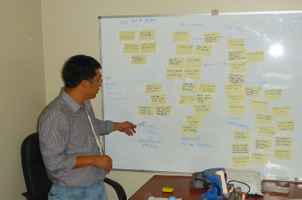
Equip teams to investigate failure, preserve evidence and implement lasting action.
Audience: Fundamental: operators, fitters and maintainers. Advanced: engineers, supervisors, planners and specialists addressing repeat or high-consequence failures.
Lubrication
Control the fluids and work practices that determine component life.
Condition monitoring
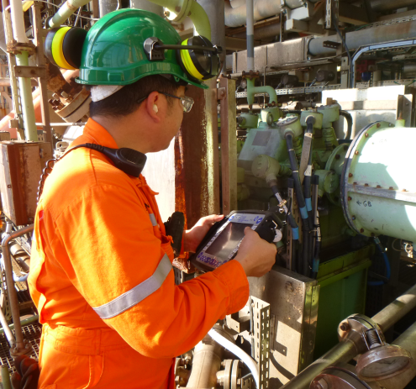
Improve data quality, interpretation and maintenance response.
Introductory and advanced pathways for technicians, engineers and reliability teams.
Inspection points, trustworthy data and common fault patterns.
Use, limitations, inspection planning and action from findings.
Integrate technologies with work management and defect elimination.
Tailored awareness and inspection training for operations teams.
Precision alignment
Improve machinery installation quality and reduce avoidable loading.
Learning outcomes: improved repeatability and confidence, better alignment decisions for critical assets, and documented as-found/as-left results.
Course selection by role
Match the learning pathway to the decisions and work each role performs.
Operators, fitters, technicians and lubrication personnel. Focus: fundamentals, inspection, sampling, greasing, evidence capture and practical work quality.
Maintenance, reliability and mechanical engineers; condition-monitoring specialists. Focus: analysis, program design, failure mechanisms, strategy and advanced applications.
Supervisors, planners, asset managers and maintenance leaders. Focus: governance, standards, KPIs, risk, program maturity and sustainable improvement.
How a training plan comes together
Identify roles, equipment, risks and performance objectives.
Choose foundation, advanced or tailored modules for each cohort.
Use relevant examples, guided exercises and field application.
Provide coaching, follow-up work and measures of on-the-job adoption.
Reliability & rotating equipment training