Select
Review bearing selection against operating duty and site conditions. Assess fits, internal clearance and sealing requirements.
Bearing expertise
Practical engineering support across the bearing lifecycle, from installation quality to evidence-led defect elimination.
Selection • Installation • Lubrication • Troubleshooting • RCFA • Training
The bearing lifecycle
A connected service offering, from specification to prevention of repeat failures.
Review bearing selection against operating duty and site conditions. Assess fits, internal clearance and sealing requirements.
Support workshop assembly and site installation. Evaluate foundations, alignment and baseline vibration.
Review lubrication and regreasing practices. Investigate failures and develop corrective actions.
Selection and assembly
Build quality into the machine before it enters service.
Technical checks follow applicable OEM specifications.
Site installation
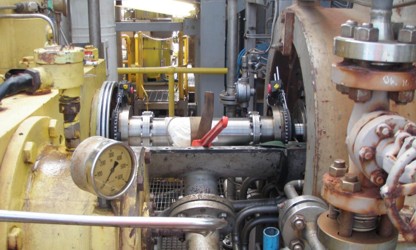
Practical support for machine installation and commissioning readiness.
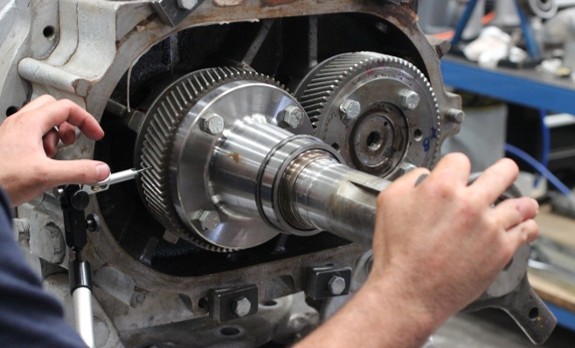
Workshop acceptance test support
Preserve critical evidence while resolving assembly and repeat-test problems.
Support controlled machine dismantling. Secure bearings, lubricant and associated components for investigation.
Review bearing and machine assembly. Check fits, axial fastening and bearing arrangements against specifications.
Assist with repeated workshop acceptance testing failures. Connect test observations to physical evidence and machine history.
Lubrication support
Translate lubricant selection into practical maintenance controls.
Review lubricant suitability for duty, speed, load, temperature, operating and environment conditions. Consider bearing and housing types and sealing arrangement. Consider lubrication compatibility and contamination exposure.
Set regreasing quantities, intervals and methods appropriate to the application. Document critical lubrication points.
Review grease condition and operating trends through bearing inspection and vibration analysis. Use investigation findings to identify maintenance improvements.
See our lubrication and oil analysis service See our FLAC service
Investigation depth
Match the investigation to the question and available evidence.
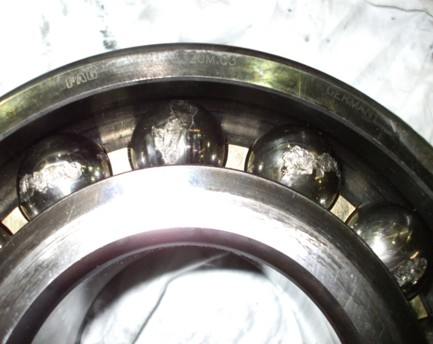
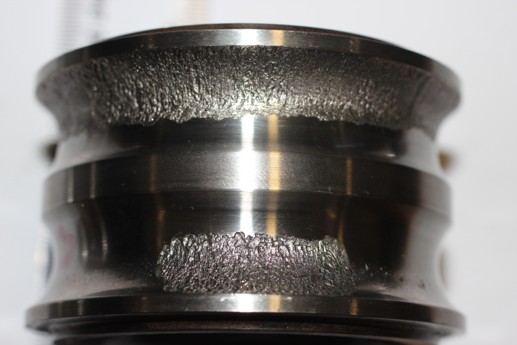
Photograph and describe damage. Classify observed defects and identify the ISO failure mode classification. Deliver a clear inspection record.
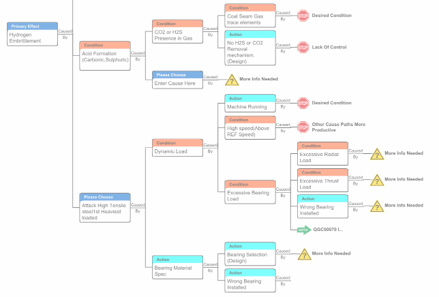
Combine physical evidence with condition monitoring data, operating and maintenance history. Identify the most probable damage and failure mechanisms.
Evaluate causal hypotheses and system contributors. Develop corrective actions and a verification plan.
Evidence-led investigation
Secure failed components. Capture as-found condition. Retain lubricant and operating records. Evaluate dimensions, fits, tolerances and forms of components.
Inspect raceways, rolling elements and cages. Review vibration, temperature and maintenance history. Workmanship and assembly quality. Bearing, housing and seal selection.
Test alternative explanations. State confidence and evidence gaps. Recommend checks and corrective actions.
Training
Bearing, housing, seal and lubrication training for fitters, operators, monitoring teams, engineers and managers.
Bearing identification and handling; Installation and lubrication practice; Inspection and evidence capture
Damage mechanisms and troubleshooting; Vibration and temperature correlation; Root cause investigation
Work standards and quality assurance; Defect elimination priorities; Corrective-action follow-up
Bearing expertise